
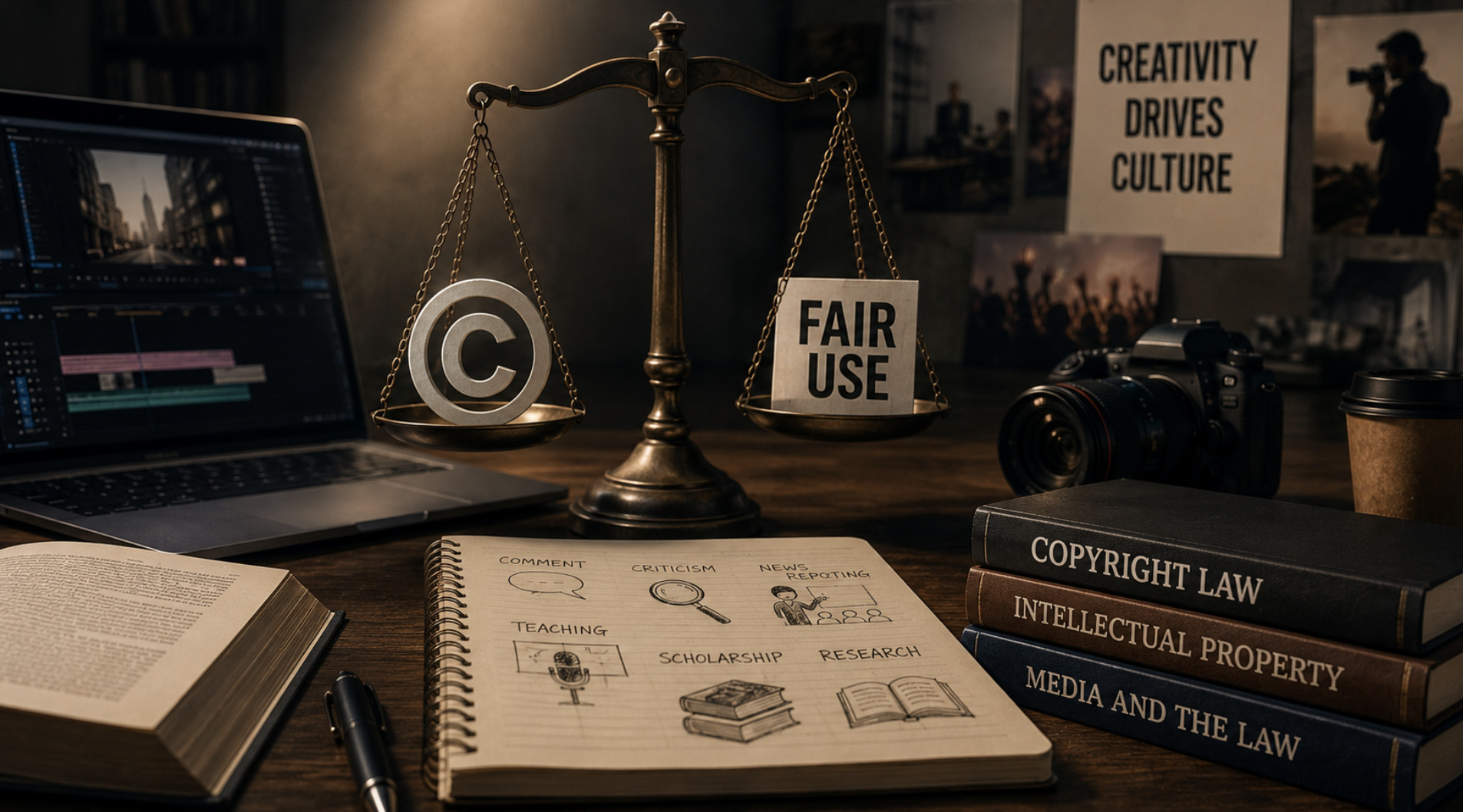
Few ideas in copyright are invoked as often, or understood as poorly, as fair use. It is cited to justify everything from memes to documentaries to lifting an entire song, frequently by people who assume that crediting a creator, or not making money, automatically makes a use fair. The reality is more nuanced and more interesting. Fair use is a genuine and important part of copyright law, but it is a limited, case-by-case exception rather than a blanket permission — and understanding where it begins and ends is essential for anyone who creates, shares or reuses content.
What fair use is
Fair use is a doctrine in United States copyright law that permits limited use of copyrighted material without the rights-holder's permission in certain circumstances. Its purpose is to keep copyright from smothering the very things copyright is meant to encourage: commentary, criticism, education, journalism, research and new creative work that builds on what came before. Without some version of this safety valve, ordinary and socially valuable activities — quoting a book in a review, showing a clip to critique it, parodying a song — could all be acts of infringement.
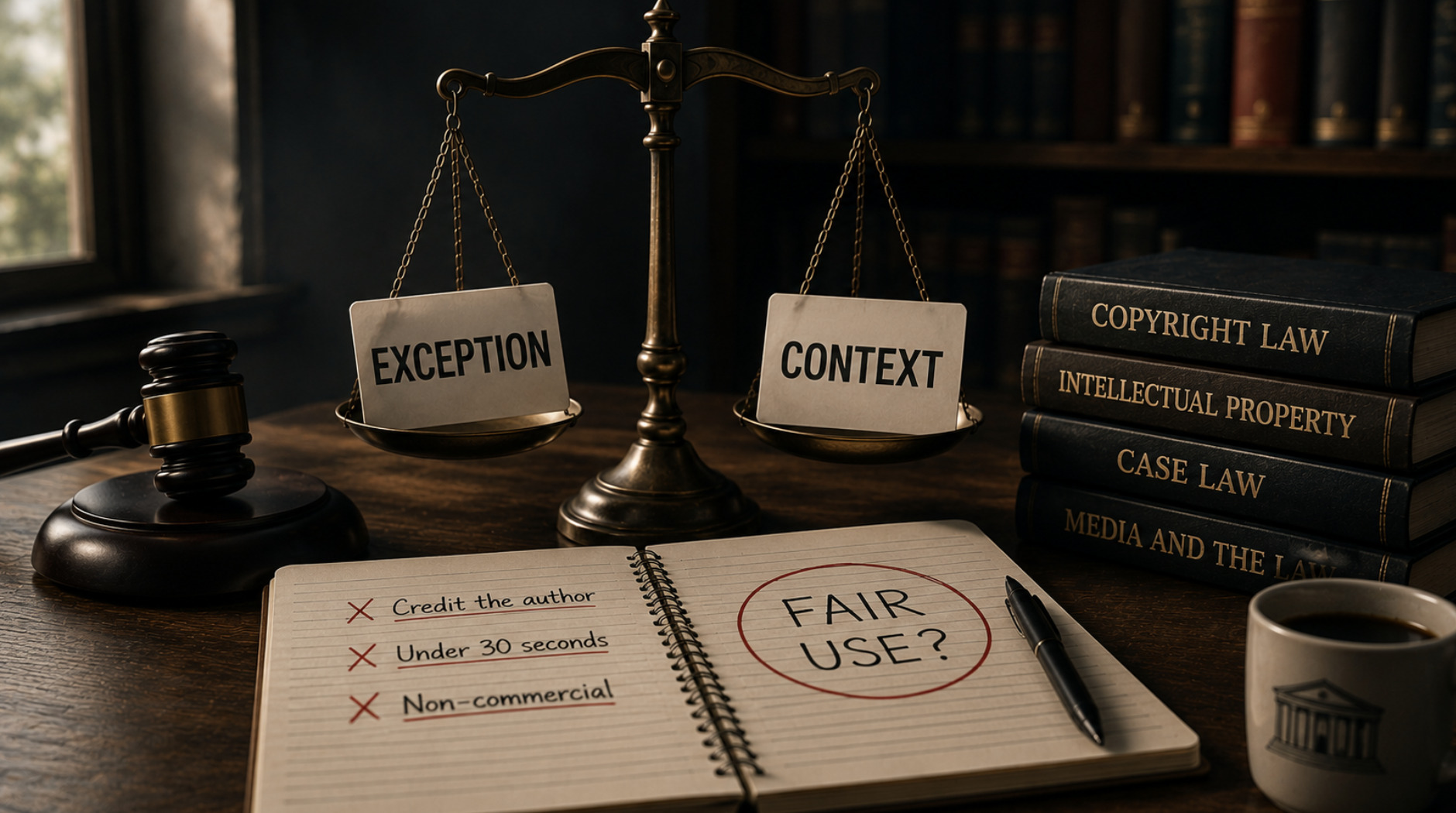
The crucial thing to grasp is that fair use is an exception, not a right you can claim in advance with certainty. It is decided by weighing the specifics of each situation, and reasonable people, including judges, can disagree about where the line falls. This is why blanket rules of thumb — "it's fine if I credit the author," "it's fine if it's under thirty seconds," "it's fine if it's non-commercial" — are unreliable. None of these, on its own, determines whether a use is fair.
The four factors courts weigh
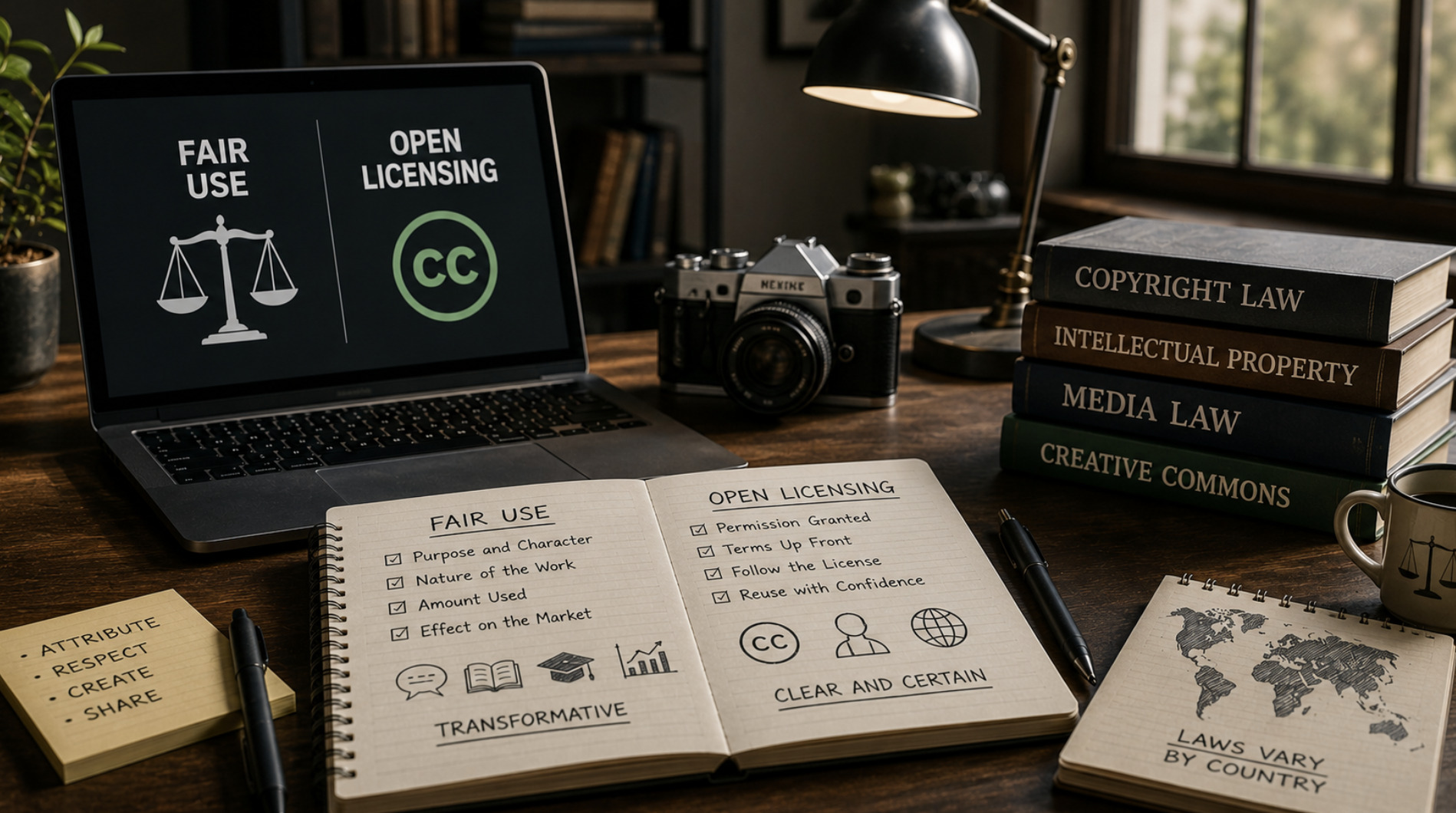
When a fair use question reaches a court, it is analysed through four factors considered together. The first is the purpose and character of the use, including whether it is commercial or for non-profit and educational purposes, and — often decisively — whether it is "transformative," meaning it adds new meaning, message or purpose rather than simply reproducing the original. The second is the nature of the copyrighted work, since using factual material tends to weigh more toward fair use than using highly creative work like a novel or a song.
The third factor is the amount and substantiality of the portion used, both in quantity and in importance; using a small, peripheral excerpt weighs toward fair use, while taking the "heart" of a work weighs against it, even if it is a small fraction. The fourth is the effect on the potential market for the original — whether the use competes with or substitutes for the original and harms its value. No single factor is decisive; courts balance all four, and the outcome depends on how they combine in a particular case. This is precisely why fair use resists simple formulas.
Common myths that get people into trouble
Because fair use is so widely misunderstood, a few persistent myths deserve to be dismantled. The most common is that giving credit makes a use fair. Attribution is good practice and may be required by some licences, but it has nothing to do with fair use; you can credit a creator perfectly and still infringe. A related myth holds that any non-commercial use is automatically fair. Non-commercial purpose does weigh in your favour under the first factor, but it does not settle the matter, and plenty of non-commercial uses are not fair.
Another myth is that a fixed amount is always safe — a certain number of seconds of a song, or words of a text. There is no such magic number; using even a small but central portion can weigh against fair use, while using more of a factual work for a transformative purpose may be fine. Finally, many people assume that if something is freely available online, it is free to use. Availability is not permission; a photograph on a public web page is still protected by copyright unless its owner has said otherwise. Believing any of these myths is how well-meaning creators end up infringing.
Fair use is not the same as open licensing
It helps to distinguish fair use from the more predictable world of open licensing, because they solve the problem in opposite ways. Fair use is an exception you invoke about someone else's copyrighted work, decided after the fact and never fully certain in advance. Open licensing, by contrast, is permission granted ahead of time by the creator, who tells the world exactly how their work may be reused. When a creator releases a work under a licence such as Creative Commons, they remove the guesswork: the terms are stated up front, and if you follow them, you are on solid ground.
This is why, for anyone who wants certainty, seeking out openly licensed or public domain material is far safer than relying on a fair use argument. If you understand the terms — which our guide on Creative Commons licences explained lays out, and which apply differently again once a work enters the public domain — you know your rights in advance rather than betting on how a court might weigh four factors. Fair use and open licensing both keep culture flowing, but only one of them gives you an answer before you act.
Where fair use ends
Understanding the limits of fair use is as important as understanding its promise. It is a doctrine of United States law, and other countries handle the same problem differently; the United Kingdom and Canada, for example, have narrower "fair dealing" provisions that permit reuse only for specific listed purposes. So a use that might be defensible as fair use in one jurisdiction may not be permitted elsewhere, which matters enormously on a global internet. Fair use also offers no guarantees: because it is decided case by case, even a strong argument is not a certainty, and the only way to know definitively is a court ruling few people ever want to reach.
The sensible takeaway is to treat fair use as a genuine but limited tool, not a loophole. Lean on it thoughtfully for the transformative, commentary-driven, educational uses it was designed to protect, understand that credit and non-commercial status do not by themselves make a use fair, and remember that "available online" never means "free to use." When you want certainty rather than a defensible argument, reach for openly licensed or public domain works, attribute them correctly, and you sidestep the question entirely. This article is general information rather than legal advice; for a specific situation, especially a commercial one, consulting a qualified professional is always the wise course.